
A few years ago, the pride of our childhood was outdoor games. Most of our day was spent playing in the streets and neighborhoods. Television did enter our lives, but its influence was limited. In joint families, people were the source of each other’s entertainment, so loneliness or boredom was rare.
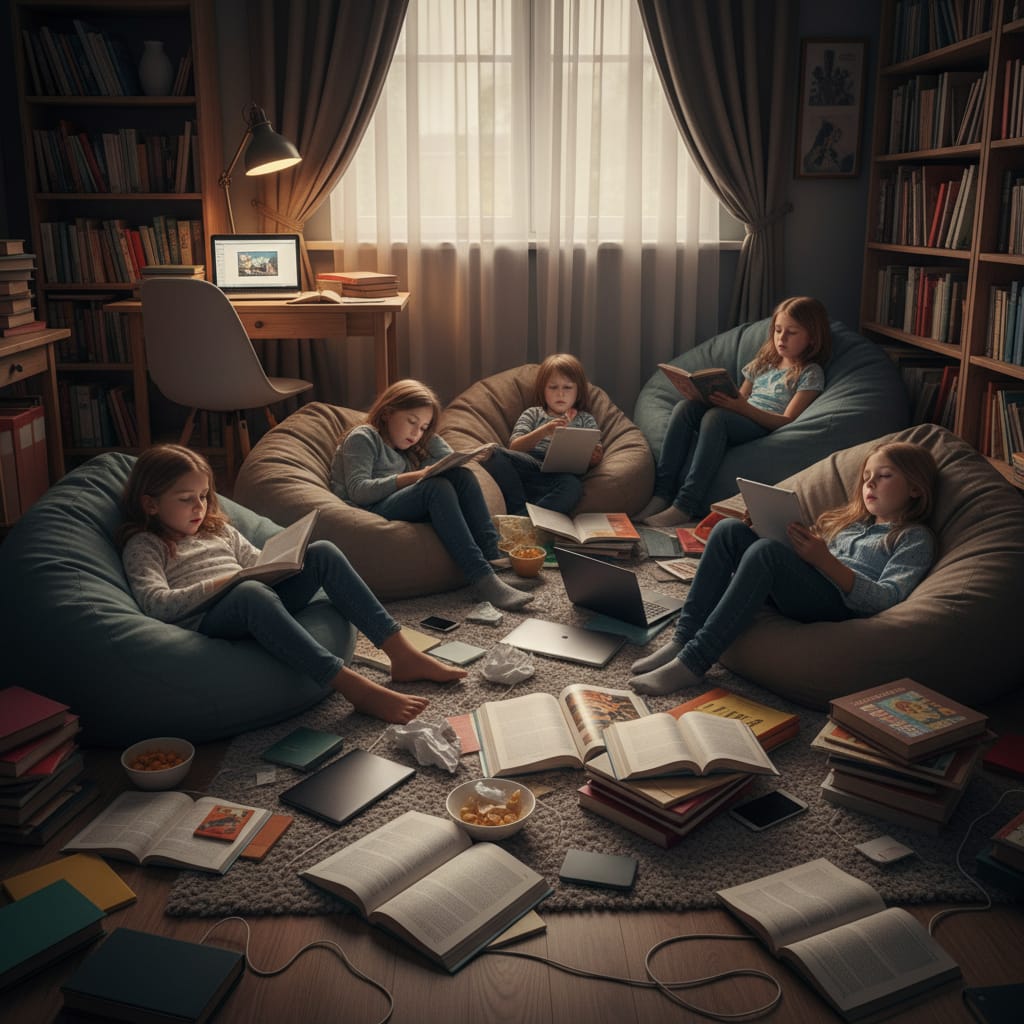
Today, things have changed. Children spend the whole day between school and tuition. Even after giving almost ten hours to studies, education feels incomplete. Parents, especially mothers, spend most of their time helping with homework. Sometimes it even feels that if these mothers had put the same effort into their own studies, they might have become IAS or IPS officers.
Still, during parent-teacher meetings, schools often ask parents why their child is weak in studies. But the real question should be asked to teachers: despite spending half a day in school, why is education still incomplete? Unfortunately, our time is no longer about asking questions but only about giving answers.
Because of school and tuition fatigue, children don’t have time left for playgrounds. Outdoor games have been replaced by mobiles, tablets, laptops, and TV. Sports are now played virtually.
A sportsman once asked some children what games they play. The children replied with names like cricket, football, hockey, and tennis. When the sportsman asked where the playgrounds were, the children smiled and said, “No Uncle, we play them on mobile.”
Another reason children don’t go out is the lack of safety in society. Parents fear theft, kidnapping or sexual harassment. Children who once roamed free in open fields are now confined within cage, like “Broiler Chickens.”
Technology has also distanced us from real relationships. Even a friendly old man who irons clothes now spends his free time on his smartphone. Technology has connected us to the farthest person in the world, but distanced us from the ones sitting beside us.
This truth doesn’t need any laboratory research, we all feel it. Education and technology together are changing both children and society. The tragedy is that we have accepted this as our destiny.
From newspapers, I often read reports from The New York Times, where developed nations are now trying to rebuild their social fabric. They realized that while they gained everything, they lost the real strength of life, relationships, sports, and human connection. The hope remains that just as a snake, no matter how far it goes, eventually returns to its hole, we too will return to our roots.